
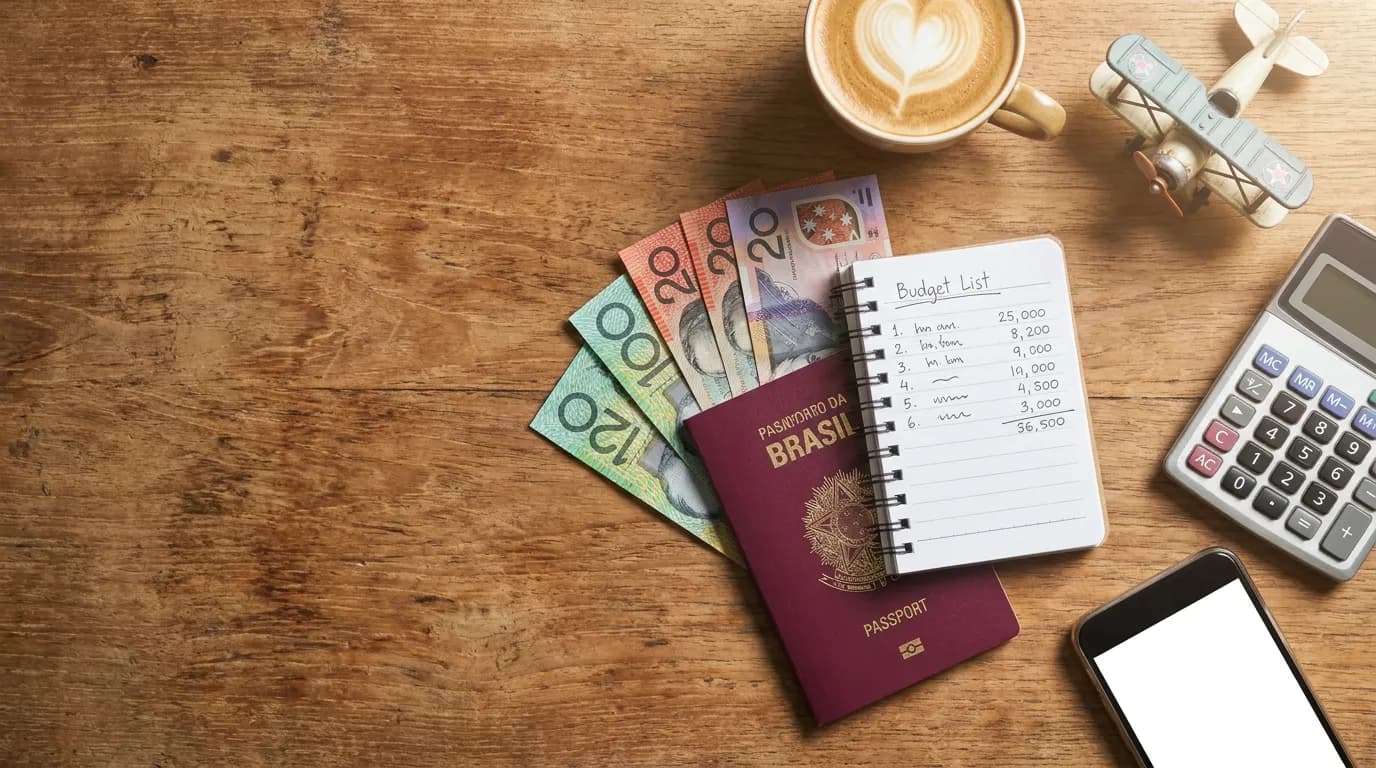
How much studying abroad in Australia costs depends on three choices: the course, the city and how long you want to stay. There's no single price, but there is a fixed list of costs that goes into any plan: the course, the visa fee, mandatory health insurance (OSHC), the medical exam, flights, proof of funds and the cost of living in the first months. In this guide we go through each item, what is usually paid before you fly and how to build a budget that won't catch you by surprise.
Why there's no single figure
People who ask how much studying abroad in Australia costs almost always expect a round number. The honest answer is that an English course of a few months in Adelaide costs very differently from a two-year Diploma in Sydney. What changes the final amount:
- Type of course: English (ELICOS), vocational courses (VET) and higher education have very different price ranges.
- Length: more weeks of study mean more tuition, more months of insurance and more cost of living.
- City: rent and transport weigh more in Sydney and Melbourne than in smaller cities.
- Lifestyle: sharing a house, cooking and using public transport make a big difference at the end of the month.
That's why the first step is to define the goal of your study abroad. Do you just want to study English? Do you want to do a vocational course and work in the field? Do you want a bachelor's or master's degree? That answer guides the rest of the budget.
The costs you pay before you fly
Before applying for the student visa, some amounts need to be paid or organised. They make up the "initial investment" of your study abroad.
- Course deposit to issue the CoE: the school asks for a deposit to issue the Confirmation of Enrolment, the document that proves your enrolment. In 2U's 2026 materials, this deposit ranges from AUD 250 to AUD 4,500, depending on the school and the course.
- Student visa fee: it's paid to the Australian government when you apply. According to the July 2026 update, the visa application charge is AUD 2,500. As it changes often, always check the amount on the Department of Home Affairs website before applying.
- OSHC: the mandatory health insurance must cover the whole visa period. For a single policy, the reference used by 2U in 2026 is about AUD 53 per month, but the amount varies by insurer and type of plan.
- Medical exam: when immigration requests it, it's done at Bupa. The amount given in our 2026 materials is AUD 392.94 per person.
- English test: required for some courses and profiles, not all.
- Flights: prices vary a lot with the time of year and how far ahead you buy.
A common question: do I need to pay the whole course before I go? In general, no. For courses longer than 25 weeks, the institution can't require more than 50% of the tuition before the course starts. For courses of up to 25 weeks, the full amount can be required. The rest is usually paid in instalments according to the payment plan in your letter of offer.
Proof of funds: does the money need to be in your account?
For the student visa, you need to show that you can support yourself during your studies. The minimum amount is set by immigration and updated from time to time, so check the current figure on the official website or with our team.
The money doesn't necessarily need to be all in your account. You can show the income or funds of your parents or partner, as long as the source is legitimate and the relationship is documented. What immigration assesses is whether the money is genuine and accessible to you. Organised, consistent statements make a big difference here.
Cost of living in Australia: what weighs month to month
Once you arrive, your expenses change shape. The cost of living is one of the most talked-about topics in the country right now: pricier groceries, high rents, fluctuating fuel and rising electricity bills. People who live here feel it every day, and anyone planning needs to factor this reality into the budget.
The main monthly expenses are:
- Housing: usually the biggest item. Sharing a room or a house lowers it a lot.
- Food: cooking at home and shopping with a list is much cheaper than eating out.
- Transport: public transport is efficient in the big cities, and each state has its own card and fares.
- Phone and internet: there are affordable prepaid plans.
- Leisure: beaches, parks and trails are free, which helps a lot.
One thing every student finds out quickly: a good part of the money you save goes to visa fees, school, the medical exam and the English test. Planning for this from the start avoids tight spots later.
Does working help pay the bills?
Yes. The student visa lets you work legally, currently with a limit of 48 hours per fortnight during study periods. This helps a lot with the cost of living, but it shouldn't be the basis of your initial budget. The first months include settling in, resumes, interviews and documents like the TFN, so bring savings to support yourself until your first job comes along.
How to build your budget in 5 steps
- Define the goal: English, VET, a bachelor's or a master's degree. This defines the course, the length and the type of visa.
- Choose the city: research the climate, cost of living, job market and lifestyle.
- List all the costs: course, deposit, visa, OSHC, medical exam, flights, proof of funds and housing.
- Start early: plan at least 6 months ahead, mainly because of the visa.
- Leave a margin: keep 10% to 20% more than estimated. Fees go up and the unexpected happens.
A simple spreadsheet, with each item and its expected payment date, already takes care of most of the anxiety. When you see the total split by month, the goal becomes concrete.
Frequently asked questions
- Do I need to speak fluent English to study abroad in Australia?: No. Many people arrive starting from zero and learn in practice, in class and in everyday life. Some vocational and higher education courses require a minimum level, but that's exactly what the English course is for.
- Can I pay for the course in instalments?: In most cases, yes. You pay a deposit to receive the CoE and the rest follows the school's payment plan. For courses longer than 25 weeks, the school can't charge more than 50% before the start.
- Do visa and insurance costs change?: They do, and often. Use the figures in this guide as a reference and always confirm on the Department of Home Affairs website and with the insurer before finalising your budget.
- Can I study abroad in Australia on a small budget?: You can do a more affordable study abroad by choosing the city, the length and the type of housing well. What you can't do is go without savings: proof of funds is required and the first months have setting-up costs.
Every case has its own details, and the best budget is the one that comes from your goal. 2U Study is made up of Brazilians who live in Australia and support students from choosing the course to after they arrive. If you'd like a quote with schools, prices and timelines for your profile, talk to us through our online service or request your quote here on the website.